Real-time insights to protect concrete from early-age failure.
Our system continuously tracks humidity conditions inside curing concrete for up to 72 hours after placement. By knowing what's happening within the slab—not just on the surface—you can adjust curing methods instantly to counter changing weather and prevent random cracking.
Why It Matters
Concrete curing is sensitive and highly dependent on the first few days of hydration. If temperature, moisture, or water retention fall outside ideal ranges, the hydration process is disrupted. The result: poor hardening, reduced durability, and failures such as cracking, curling, spalling, or loss of strength.
Because atmospheric conditions shift quickly, traditional curing methods rely on guesswork. Our system eliminates that uncertainty.
Humidity Monitoring System
Our solution uses a precision humidity monitor and vacuum pump to draw moisture samples directly from the interior of the curing concrete. A single high-accuracy dew point temperature (DPT) sensor analyzes each sample within a sealed sampling tank—ensuring consistent, reliable readings.
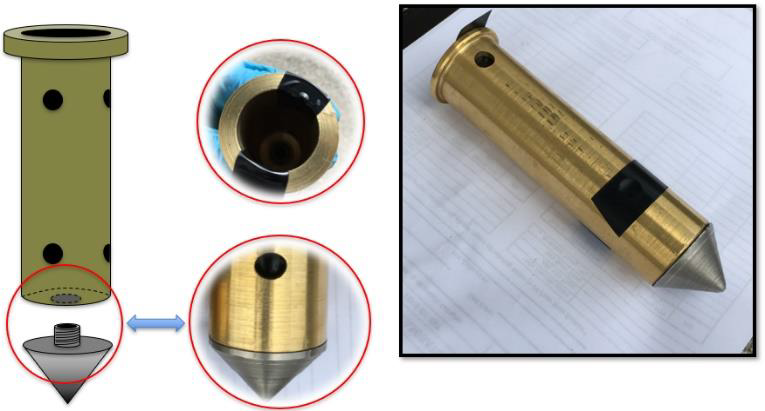
Sampling chambers are placed into the concrete while fresh and remain embedded throughout curing. They can be positioned at multiple locations or depths to provide a complete picture of moisture behavior across the slab.
Evaluation Index (EI)
All moisture data is turned into a simple score called the Evaluation Index (EI). This score tells your crew—at a glance:
- How well the concrete is curing
- Whether the surface is staying dense and protected
- If you need to adjust your curing methods based on the weather
The EI removes the guesswork. It shows exactly when to apply water, curing compounds, or other treatments to keep the slab on track. Instead of waiting for problems to appear, your team gets a clear signal for what to do next—saving time, reducing rework, and delivering a stronger, longer-lasting pavement.
Real-Time Adjustments
With continuous monitoring and instant feedback, contractors can fine-tune curing methods as conditions change—no guessing, no delays. This real-time response improves efficiency, reduces risk of early-age defects, and enhances long-term performance of the concrete.